Part 107 training & competency→
Live Part 107 preparation and competency-based recurrent training, aimed by a remote-pilot competency taxonomy derived from Part 107 accident and incident data. The certificate is where it begins, not where it ends.


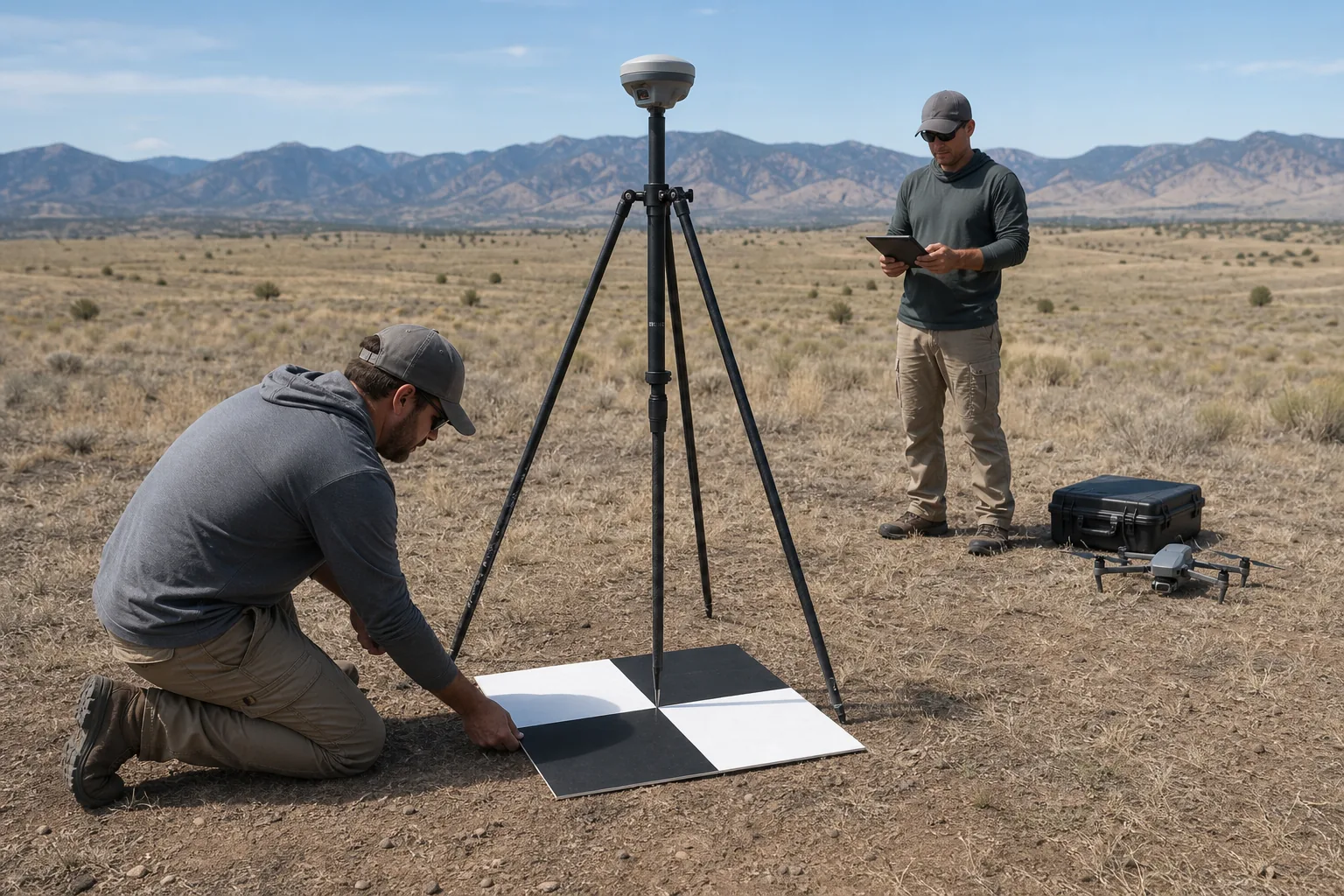
Ground control target set
Outlook UAS helps teams decide what to own, standardize current operations, prepare for expanded authority, and train pilots through scenario-based work tied to the missions they perform.
Free either way. If nothing needs fixing, that is worth knowing too.
An in-house program is a chain. Each link below has to hold for the decision at the end to hold. A certificate licenses a pilot; it does not demonstrate competence for this aircraft, payload, and mission.
Who owns mission approval, safety, competency, and final acceptance, and whether the documented practice matches what actually happens.
The planning standard, airspace, site hazards, and weather limits tied to the deliverable, and who holds go/no-go authority.
Mission competence beyond the certificate, recurrent proficiency, and the three human-factors patterns behind real UAS accidents: skill-based errors, decision-making, and known deviations.
Configuration, Remote ID, firmware, batteries, and maintenance, captured in records you could reconstruct months later.
Turning the intended use into a collection specification: altitude, ground sample distance, overlap, geometry, control, checkpoints, and acceptance criteria.
Independent verification, coordinate systems and datums, a measured RMSE with limitations, and reproducibility: produced-to versus tested-to.
Storage, retention, and access; the complete cost per accepted, decision-ready output; procurement discipline; and the path to scale.
Open any stop on the chain to read the operating domain behind it. The free call above touches the areas most relevant to your program today; a fuller Review examines all seven domains and connects findings to evidence you already have.
Find the closest condition, then follow its branches. Each path names the most useful place to begin, without grading the program or forcing it into a package.
Standardization, currency, records, and training cadence read differently depending on who flies that day.
A free conversation reads standardization, pilot currency, records, and training cadence as they operate today. Verbal recap, one next step, no score.
A fixed-scope look across the program's operating domains, tied to evidence you already have. Findings and a prioritized plan you own.
Control, workload, go/no-go judgment, and recovery rehearsed against the missions pilots actually perform.
Mission frequency, geography, workflow fit, internal people, and control of the record decide the model before any equipment does.
Payloads used once or twice a year cost far more to own than to hire from a specialist who flies them.
Six signals that favor an internal capability, tested before equipment is bought. Ownership has to earn its place.
Build the recurring core in-house, hire the exceptions, and keep one operating record across both.
Operating authority is prepared on paper before it is flown. The useful first move depends on which relief the mission actually needs.
A readiness review against the target waiver, a prioritized roadmap, and coaching for your CONOPS, risk analysis, and safety case.
Consolidate Part 107-era evidence into the shape the proposed rule would expect, without assuming the final rule preserves it.
Thirty minutes to separate what is actually waivable from what is an authorization, and to name the next step.
Part 107 knowledge preparation and recurrent program training are different jobs. The right entry depends on where the pilots stand.
Live preparation for the certificate, taught from a working aerial-data operation. The certificate is where it begins.
The three patterns behind real UAS accidents, rehearsed against your own missions instead of generic drills.
Flight work observed and documented to a stated standard. Knowledge is trained; practical ability is demonstrated.
The accepted deliverable defines the field work: control, checkpoints, resolution, overlap, and completeness before the crew leaves the site.
Plan the field work from the required deliverable, backward, on a repeatable accuracy standard rather than an operator's memory.
Surveyed checkpoints, a documented RMSE, and an honest checkpoint count against what the program believes it has.
Field-checked collection with a qualified 24-hour handoff, while your team keeps the decision.
Want to inspect the evidence first? Review the research basis→
One free call is the whole commitment today. Everything past it is scoped only if it earns its place. This is the shape of the work, not a schedule.
The first signal comes in the call itself. How fast the rest moves is set by what the program needs, not by a clock we impose.
Each has its own page: what it covers, how it is delivered, and what a program walks away with. Every one of them begins with the same free call.
Live Part 107 preparation and competency-based recurrent training, aimed by a remote-pilot competency taxonomy derived from Part 107 accident and incident data. The certificate is where it begins, not where it ends.
The intended use turned into a collection specification (control, ground sample distance, overlap, and checkpoints designed before the flight) with field completeness checks before the site is left. Fewer reflights, data accepted the first time.
Accuracy stated the only way that defends itself: intended use, coordinate system and datum, control, independent checkpoints, a measured RMSE, and honest limitations, to a stated ASPRS class, tested independently.
Graduate research (Embry-Riddle) applying HFACS to FAA Part 107 accident and incident data, standards work, and the operational aviation history the practice stands on. Credentials and documentation on request.
An independent accuracy verification against a program's own data is often the most useful first hour: surveyed checkpoints, a documented RMSE, and an honest checkpoint count against what the program believes it has.
How an Accuracy Verification works→
Everything on this page is either educational or the free call. A fuller Program Review, competency Build, and ongoing Sustain support are scoped in conversation, never sold from a page.
Research helps aim program questions and scenario-based training. It does not substitute for a review of the organization's own operation.
The retrospective graduate study (Embry-Riddle) identifies patterns in practical proficiency, decision-making, and known deviations. It does not establish causation, evaluate a training program's effectiveness, rank operators, or promise outcomes. Credentials and documentation on request.
No polished binder is required. Bring the mission types, current practices, and the point where useful or repeatable work is getting stuck. If nothing needs fixing, that is worth knowing too.